
 By
By 
When a strong storm rolls through Chicago, roofs take the brunt of the damage. Hail dents shingles, high winds tear off flashing, and heavy rain finds its way into attics through openings that were not there the week before. Homeowners suddenly find themselves needing repairs fast, and that urgency creates the perfect opening for scammers.
Storm chasing contractors follow severe weather across state lines, knocking on doors with promises of free inspections and insurance-covered repairs. Some of these companies vanish before the work is finished, while others use inflated estimates and pressure tactics to squeeze out as much money as possible. Knowing the warning signs before you sign anything can save you thousands of dollars and a lot of frustration.
Why Storms Bring Out Roofing Scammers
Severe weather creates a short window where demand for roof repair spikes and homeowners feel like they need to act immediately. Scammers count on that urgency. They often show up within hours of a storm, sometimes claiming to have already inspected your roof from the street or to be working in your neighborhood on another job. Unlike trusted Chicago roofing contractors, these traveling crews rely on speed and pressure.
They collect a deposit, perform a rushed or incomplete repair, and move on to the next town before problems surface. Because Chicago sees regular hail and wind events, the region has become a familiar stop on the storm chasing circuit, which means local homeowners need to be more careful than most when evaluating who they let onto their roof.
Common Warning Signs of a Storm Chasing Contractor
A few patterns show up again and again with storm chasing crews. They often arrive unsolicited, going door to door immediately after a weather event rather than being contacted by the homeowner. Many will offer a free roof inspection and claim to have found damage severe enough to require full replacement, sometimes climbing onto the roof without permission first.
Trucks with out of state plates or magnetic company logos that look freshly printed are another common sign. Pricing that seems to match your insurance deductible a little too conveniently is worth questioning as well, since some scammers write estimates around what they assume your policy will cover rather than what the actual repair costs.
If a contractor cannot provide a local address, a permanent phone number, or references from recent jobs in your area, that absence should raise more concern than any sales pitch can offset.
Red Flags in the Sales Pitch and Contract
High pressure sales tactics are one of the clearest indicators that something is wrong. Contractors who insist you sign a contract on the spot, warn that a discount expires within the hour, or discourage you from getting a second opinion are behaving in ways legitimate companies rarely need to. Contracts themselves deserve close attention.
Vague scope of work, missing material specifications, and blank spaces left for the contractor to fill in later are all warning signs. Be especially cautious of any clause that assigns your insurance benefits directly to the contractor, known as an assignment of benefits, since this can limit your control over the claims process.
A trustworthy contractor puts everything in writing clearly, including start dates, materials, warranty terms, and payment schedules, and is willing to answer questions about each line before asking for a signature.
How to Verify a Contractor Before You Sign
Before agreeing to any repair, take a few steps to confirm who you are actually working with. Check that the company holds a valid Illinois roofing license, since the state requires licensing for any roofing contractor performing work over a certain dollar threshold. Ask for proof of general liability insurance and workers compensation coverage, then verify it directly with the insurance carrier rather than trusting a photocopied certificate.
Search the company name along with the words complaint or review to see what past customers have experienced. A physical business address that you can find on a map, rather than just a post office box, is another good sign of legitimacy. Finally, ask how long the company has operated in the Chicago area specifically, since an established local presence is much harder to fake than a temporary storefront.
What Legitimate Storm Damage Assessment Looks Like
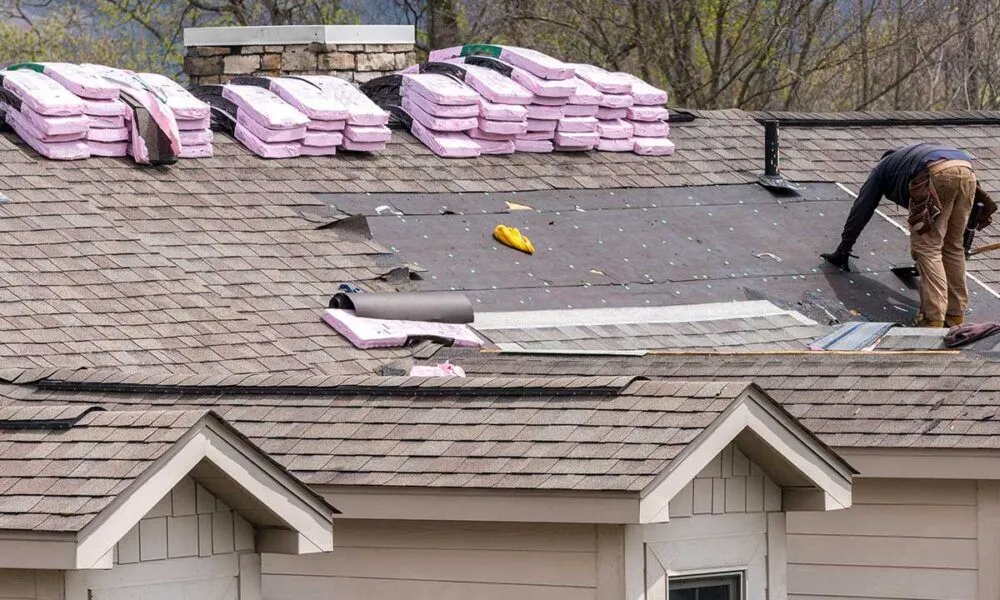
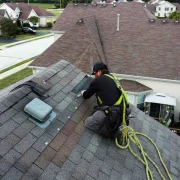
A proper roof inspection after a storm involves more than a quick glance from the ground. A reputable contractor documents damage with photos, checks flashing, vents, and gutters in addition to the shingles themselves, and explains findings in terms a homeowner can understand rather than vague claims of severe damage.
They should be willing to walk you through what is cosmetic versus what actually affects the roof’s performance, since not every mark left by hail requires a full replacement. If you are unsure whether reported damage is being fairly represented, a second opinion from an independent, licensed inspector is a reasonable and common step.
Understanding how professionals grade storm damage severity gives homeowners a clearer framework for evaluating whether a quoted repair actually matches what the roof needs.
Conclusion
Storms will keep bringing both real roofing needs and opportunistic scammers to Chicago neighborhoods, and the best protection is simply knowing what to look for before you sign anything. Watch for the pressure tactics, verify licensing and insurance independently, and resist the urge to make a fast decision just because a truck showed up the same day as the storm.
Taking even one extra day to check references and read a contract closely can be the difference between a properly repaired roof and a costly mistake that takes months to fix.
If you want a clear picture of how much attention your roof actually needs after severe weather, understanding how professionals go about grading roof damage from least severe to most can help you ask sharper questions and make a more confident decision.


Comments